
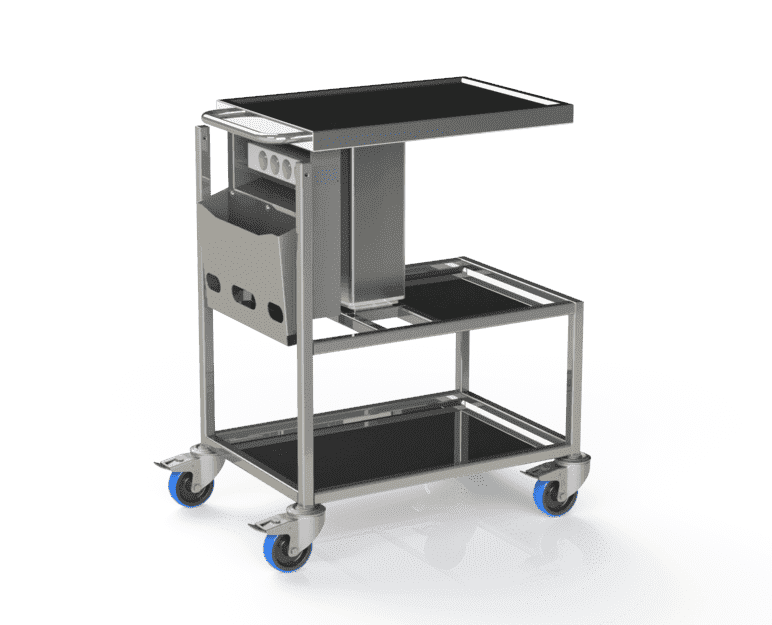






































In recent years, the medical sector has undergone an unprecedented transformation thanks to constant advances in prototyping. Medical prototyping, using cutting-edge technologies such as 3D printing, is paving the way for innovative solutions that are redefining the standards of medical practice. It has become indispensable when developing medical devices such as dialysis machines or syringe pumps. To help you achieve high-quality results, MGA Technologies supports you through every step of prototyping for the medical sector. MGA Technologies supports healthcare industry manufacturers, from design to production.
Innovations in Prototyping for the Medical Sector
The rapid evolution of prototyping for the medical sector has led to extraordinary innovations in the design and manufacture of medical devices. 3D printing, for example, offers unparalleled flexibility by enabling the creation of anatomically precise prototypes. This approach is even revolutionizing the design process, enabling healthcare players to visualize and test models before large-scale production.
Striking examples of these advances include the use of prototypes for custom-made prostheses. 3D printing enables these to be customized to the specific morphology of each patient, thus helping to improve efficiency and comfort. In addition, medical prototypes are indispensable for complex surgical procedures, providing surgeons with a simulation prior to the actual operation.
Medical devices such as implants also benefit from advances in prototyping. The ability to produce precise, patient-specific prototypes reduces the risks associated with anatomical incompatibilities, while optimizing clinical results.
The Importance of Materials in Medical Prototyping
The choice of materials in medical prototyping plays an essential role in the performance and safety of the devices developed. Fortunately, the diversity of materials available on the market means that solutions can be adapted to a wide range of medical applications.
Biocompatible polymers, widely used in medical 3D printing, make it possible to manufacture prototypes that comply with current safety standards. These materials are indispensable for applications such as surgical guides, anatomical models and temporary implants.
Metals such as titanium and stainless steel are preferred for the manufacture of permanent implants because of their strength and biocompatibility. Prototyping with these materials offers precise reproduction of designs, guaranteeing harmonious integration within the human body.
Ongoing research into new bioabsorbable materials also paves the way for temporary prototypes that gradually dissolve in the body. This, of course, helps eliminate the need for additional surgery to remove an implant, among other benefits.
Shortening Manufacturing Lead Times with Prototyping for the Medical Sector
Because the medical field is both demanding and competitive, reducing time to market is a major strategic issue for players in the sector. Rapid prototyping plays a key role in shortening manufacturing lead times. It quickly turns an idea or concept into a physical or functional model, which greatly facilitates the evaluation, testing and technical validation phases.
Thanks to advanced technologies such as computer-aided design (CAD), 3D printing, CNC machining and modular assembly, prototypes can now be produced in a few days, where traditional methods required several weeks. This responsiveness is essential for medical device manufacturers, who often have to adjust their design based on feedback from healthcare professionals or regulatory requirements.
Prototyping also speeds up functional validation. By quickly testing several versions of the same device, development teams can identify design flaws or areas for improvement earlier. This avoids late changes, which are generally costly in time and resources at the industrialization stage.
Finally, being able to present a working prototype to an ethics committee, a notified body or potential investors helps build credibility and speed up decision-making. By fully integrating prototyping into their development process, medical companies can shorten their design cycles while securing the quality and compliance of their final products.
MGA Technologies: Pioneers in Medical Device Prototyping
If you’re looking for a leader in prototyping for the medical sector, MGA Technologies is here to meet your needs. As pioneers, we are committed to pushing back the boundaries of innovation to best meet the specific requirements of the medical sector.
Our cutting-edge technologies enable us to produce medical prototypes of exceptional quality. We also work closely with healthcare professionals to design tailor-made solutions, from surgical assistance devices to the production of realistic anatomical models.
Our professionalism comes down to the search for cutting-edge materials, the customization of our designs and unrivaled rigor in quality control. The combination of these factors makes us a key player in the transformation of the medical sector through prototyping, and we can carry your project through to medical device manufacturing.
In short, prototyping for the medical sector is emerging as a major driving force in medical innovation, offering tailor-made solutions and significant advances. Companies like MGA Technologies are redefining the way healthcare players approach the design and manufacture of medical devices. This prototyping revolution promises a future where customization, precision and efficiency converge to improve the quality of medical care worldwide. To learn more, see our custom-made machine solutions.
For more information, please contact our team of experts.


